knowledge-guides

MSL and Floor Life, Explained: What Every EMS Assembler Needs to Track

A board can pass every test and still fail weeks later — because of something that happened before it was even soldered. Here's what MSL and floor life actually mean, and why the math works differently on an Indian factory floor during monsoon.

Sobin Johnson6 min read
MSL and Floor Life, Explained: What Every EMS Assembler Needs to Track

The assumption that's costing you money

Ask any EMS assembler what determines whether a batch survives reflow. Almost nobody says the packaging label.

They should.

A board can pass every visual inspection, every electrical test, and still fail weeks later. Not because of a design flaw. Because of something that happened while it was just sitting there, waiting to be soldered.

What failed was sitting open too long before anyone reached for it.


The physics in two paragraphs

Many surface-mount components - especially plastic-packaged ICs like BGAs and QFPs - are built from materials that slowly absorb water vapor from the air. There's no smell, no discoloration, no warning sign. The component looks and behaves exactly the same as it did the day it was made.

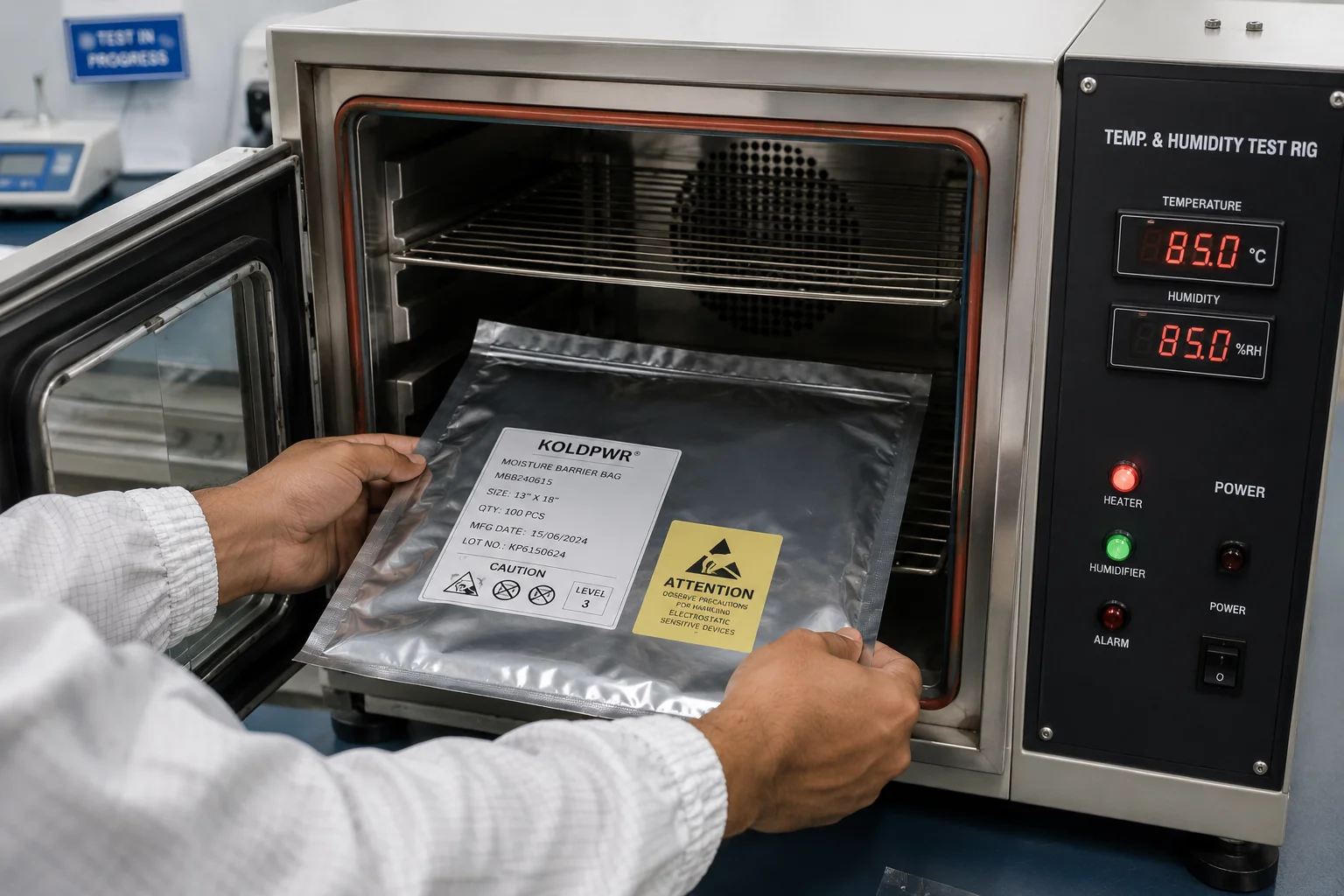
The danger shows up later, at reflow. Boards heated to peak temperatures (up to 260 degrees C for lead-free processes) flash any trapped moisture instantly into steam. That steam has nowhere to go, so it pushes outward - sometimes cracking the package internally, sometimes causing an audible "pop." Engineers call this popcorning, and it's a genuinely accurate name for what happens. [1]

MSL LevelFloor Life (at less than or equal to 30 degrees C / 60% RH)
MSL 1Unlimited
MSL 21 year
MSL 2a4 weeks
MSL 3168 hours (7 days)
MSL 472 hours (3 days)
MSL 548 hours
MSL 5a24 hours
MSL 6Bake immediately before every reflow - no floor life at all

Source: IPC/JEDEC J-STD-020 / J-STD-033 [2][3]

MSL floor life chart

Damage can range from a hairline internal crack causing an intermittent failure months later, to a fully dead component the moment it comes off the line. Either way, the root cause sits before soldering, not during it.


The trap: a rating nobody's tracking

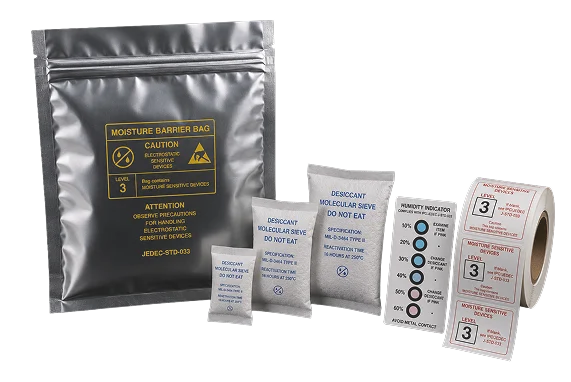
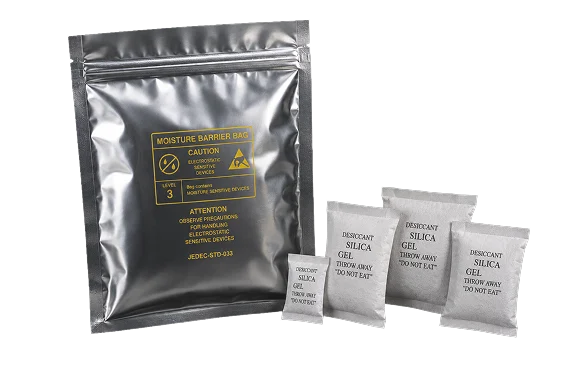
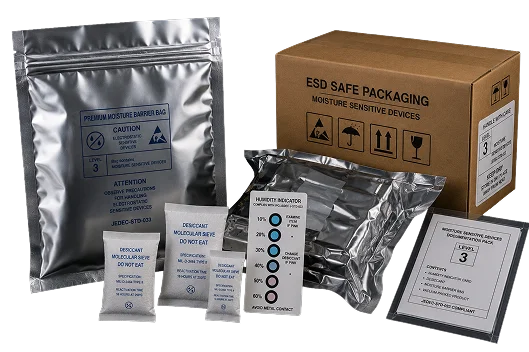
Once a sealed moisture barrier bag (MBB) is opened, the floor-life clock starts, whether or not anyone writes it down. MSL 3 is the most common rating for fine-pitch BGAs, QFNs, and larger QFPs - meaning a huge share of components on a typical EMS line are working against a 168-hour deadline from the moment their bag is opened. [2]

There's a physical reason thinner, more advanced packages tend to carry higher, more sensitive MSL ratings. Moisture absorption follows a diffusion process, and the time it takes a package to reach a critical moisture level scales roughly with the square of its thickness:

tabsorbd2t_{absorb} \propto d^2

Thinner packages soak up dangerous moisture levels far faster than thicker ones. [3] This is exactly why today's smaller, flatter chip packages are often more moisture-sensitive than the older, chunkier ones they replaced.

Bag opened          -> Floor-life clock starts, logged or not
MSL 3 component      -> 168 hours to reflow, at 30C / 60% RH
No log kept          -> Nobody knows how much time is left
Reflow anyway         -> Trapped moisture flashes to steam
Result               -> Internal crack, invisible, fails later

The companion standard: J-STD-033

If J-STD-020 defines how sensitive a component is, J-STD-033 defines what you actually do about it - dry-pack handling, storage conditions, and the bake-out process used to reset a component's floor life once it's been exposed too long. [4]

A few specifics worth knowing:

  • Baking typically runs at 125 degrees C for 24 hours for thinner packages, extending up to 192 hours for body thickness above 4.5mm. [2]
  • Humidity Indicator Cards (HICs) inside a sealed MBB show color-changing dots at set RH thresholds. Most EMS floors treat the 10% dot turning pink as the trigger to re-bake; the 5% dot is an earlier warning that the desiccant is nearing its limit. [2] If the 60% spot on the card ever shows wet, the card must be discarded and the components baked - no exceptions. [4]
  • Dry cabinets extend floor life, but don't reset it the way baking does. Only cabinets holding 5% RH or lower are considered equivalent to a sealed MBB. A 10% RH cabinet still allows some ongoing moisture accumulation. [4]

HIC card thresholds
HIC card thresholds

Why this matters more on an Indian floor than the standard admits

Here's where most global guides stop - and where the practical math genuinely changes for a facility in Nagpur, Pune, or anywhere else in India.

The 60% RH reference condition in J-STD-033 assumes a fairly typical, moderate industrial environment. Two things specific to Indian manufacturing conditions push floor-life risk in opposite, confusing directions.

During monsoon, ambient humidity outside can climb well above 85% RH. In very humid air, static charge dissipates more easily - moisture in the air gives it somewhere to go, which is why ESD risk is often lower in humid conditions. [5][6] This creates a dangerous false sense of security.

But air conditioning strips that humidity out indoors. Most EMS floors run AC hard for comfort and machinery stability - and in doing so, routinely pull indoor RH down to 25-35%, even while it's pouring outside. That's below the 40% RH threshold flagged as the point where static buildup risk rises sharply. [7][8]

LocationTypical Monsoon RHPerceived RiskActual Risk
Outdoors85%+LowLow
Indoor, AC-conditioned floor25-35%Low (feels humid outside)High

Source: Keyence, Condair humidity guidance [7][8]

Outdoor vs indoor humidity split

The same monsoon day produces two contradictory risk pictures depending on where you're standing. Outside, humidity is high enough that ESD risk feels low. Ten meters inside an air-conditioned production floor, the actual reading tells a different story - and it's the one that matters, because that's where the components are.

This is exactly why continuous, zone-mounted humidity monitoring is recommended over occasional spot checks with a handheld meter. Localized drying near AC vents or machinery creates risk pockets a single reading taken elsewhere in the same building would completely miss. [7]

For MSL and floor life specifically, the takeaway holds regardless of season: the humidity your floor-life clock actually experiences is the indoor, AC-conditioned reading - not the weather outside. A facility that assumes it's safe during monsoon because the season feels humid may be running a drier, riskier floor than it thinks.


Five things to check before your next reflow run

  1. Know the MSL rating of everything you're handling. It's printed on the packaging label - not something to guess at.
  2. Log the moment a sealed bag is opened, not just the moment the component is used. The clock starts at opening, not at first reflow.
  3. Measure indoor humidity where the components actually sit - not what the weather app says outside. A hygrometer near a storage shelf tells you more than a seasonal assumption.
  4. Treat the HIC card's reading as fact, not a formality. If it shows wet, floor life has already run out, whether or not the calendar agrees.
  5. Check dry-cabinet RH directly, don't trust the door being closed. A cabinet drifting at 9% RH looks identical to one holding 4% from across the room.
None of this requires new equipment most EMS facilities don't already have. It requires treating floor life as a number worth tracking with the same seriousness as a solder profile - because the failure it prevents is just as real, and considerably harder to trace back once it's already shipped.


References

[1] PCBCart. Mitigating Moisture Sensitivity Level (MSL) Risks in High-Density SMT Assembly. https://www.pcbcart.com/article/content/msl-risks-high-density-smt-assembly.html

[2] Cosolvic. MSL Floor Life Guide: J-STD-020 & 033. https://cosolvic.com/blog/msl-moisture-sensitivity-level-j-std-020-floor-life-baking-guide/

[3] Salitronic. MSL Levels & Bake Times: J-STD-033 Moisture Guide. https://salitronic.com/kb/moisture-sensitivity/

[4] PCBSync. J-STD-033 Guide: MSD Handling, Floor Life, Baking & Dry Storage Requirements. https://pcbsync.com/j-std-033/

[5] ESD Defender. How Does Humidity Affect ESD? https://www.esdgate.com/esd-humidity/

[6] Zbotic. ESD Protection: How to Handle Sensitive Electronics. https://zbotic.in/esd-protection-how-to-handle-sensitive-electronics-components-safely/

[7] Keyence. How Humidity Affects Static Electricity and What You Can Do About It. https://www.keyence.com/products/static/resources/static-control-resources/how-humidity-affects-static-electricity-and-what-you-can-do-about-it.jsp

[8] Condair. Why Does Low Humidity Cause Static Electricity? https://www.condair.com/humidifiernews/blog-overview/why-does-low-humidity-cause-static-electricity


Published by KOLDPWR - ESD Consumables, Buffer Stock & Electronics Handling Solutions, Nagpur & Pune.

#MSL#Moisture Sensitivity Level#Floor Life#J-STD-020#J-STD-033#ESD#Moisture Barrier Bag#EMS Manufacturing#PCB Assembly#SMT#Humidity Control#Electronics Packaging#India Manufacturing#Knowledge Guide