
Warehouse Risk
For stock lost to poor organization, one wrong shelf at a time.
Choose your level of protection
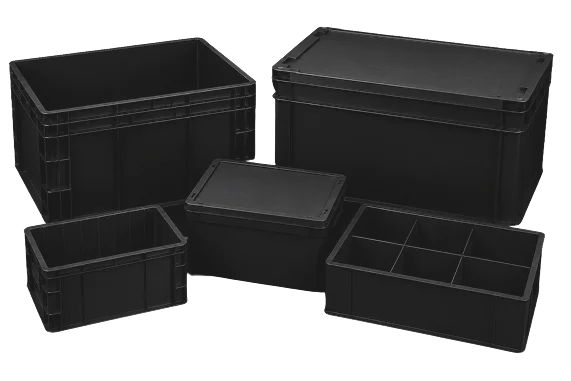
BASIC PROTECTION
- —Storage Boxes
- +Storage Bins
- +Inventory Labels
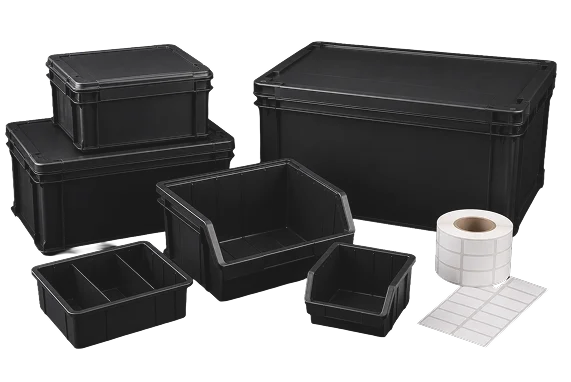
INDUSTRIAL PROTECTION
- —Storage Boxes
- —Storage Bins
- —Inventory Labels
- +FIFO Labels
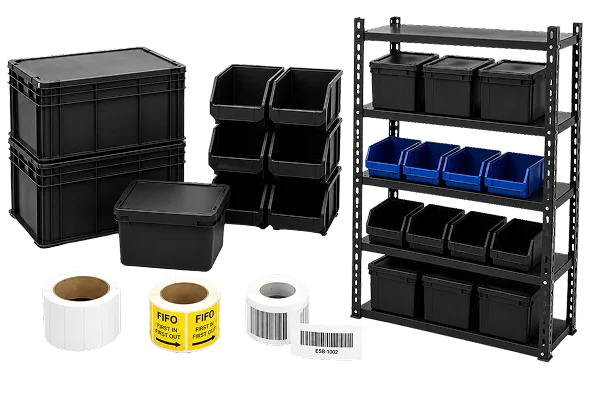
CRITICAL PROTECTION
- —Storage Boxes
- —Storage Bins
- —Inventory Labels
- —FIFO Labels
- +Barcode
- +Storage Racks
WHERE WAREHOUSE DAMAGE ACTUALLY SHOWS UP
Without a clear system, older stock gets buried behind newer stock, and no one notices until it's picked.
A batch can sit past its intended shelf life without anyone realizing, because nothing on the shelf shows how long it's been there.
The wrong batch reaches production or a customer, and the cause is only found by tracing it back afterward.
WHICH LEVEL DO YOU NEED?
Who This Protects
Common Questions
Q: What is the maximum humidity level allowed in SMT dry storage cribs?
A: IPC/JEDEC J-STD-033 recommends maintaining relative humidity (RH) at ≤5% for long-term dry storage cabinets (dry boxes). For general component storage cribs, humidity should not exceed 10% to prevent moisture absorption and halt the floor life clock.
Q: How does warehouse temperature fluctuation impact tray warping?
A: Wide temperature swings cause thermal contraction and expansion. Standard low-cost shipping trays can warp, leading SMT pick-and-place nozzle misalignment. Using dimensionally stable materials like glass-filled polycarbonate or heat-resistant PPS prevents warping under 50°C+ conditions.
Related Protection Risks
Also dealing with storage & preservation risk?
See Storage & Preservation Risk→Also dealing with transit damage?
See Transit Damage→Not sure which level fits your warehouse risk?
Share SMT/EMS details and our custom design engineers will specify target levels for your line components.